Leadership Skills: How Executives Turn Capability Gaps Into Consistent Execution
Start With Leadership Skills as Organizational Capabilities
Leadership skills become organizational capabilities when they are expressed in observable work and supported across leadership levels. Leadership competencies are observable, learnable, and measurable skills that translate leadership theory into action. Leadership effectiveness involves delivering results while supporting people, sustaining engagement, building trust, and developing others.
For an executive team, that means leadership development cannot remain a collection of disconnected topics. A shared leadership model and capability framework can give leaders common language for expectations, development conversations, and decisions. The framework should connect to the organization’s purpose, values, vision, mission, and strategy rather than stand apart from them.
This approach treats leadership development as an organizational system: define the capabilities that matter in context, make the language usable by leaders and managers, and assess whether development transfers into changed leader behavior, team experience, and the results of team work. The priority is not a universal list of essential skills. It is a capability structure that helps the organization develop leadership with a clear relationship to execution.
The sections that follow connect purpose, people, decisions, and performance to that structure, then show how to build development support and measurement around it.
Build a Shared Leadership-Capability System
Leadership skills are learnable and measurable capabilities that translate leadership theory into action. For an executive team, their value comes from creating a shared language for the responsibilities that connect organizational purpose with people, decisions, and performance. The starting point is not a fixed list of universally essential skills. It is the execution constraint your organization needs to address and the capability language leaders at different levels will use to address it.
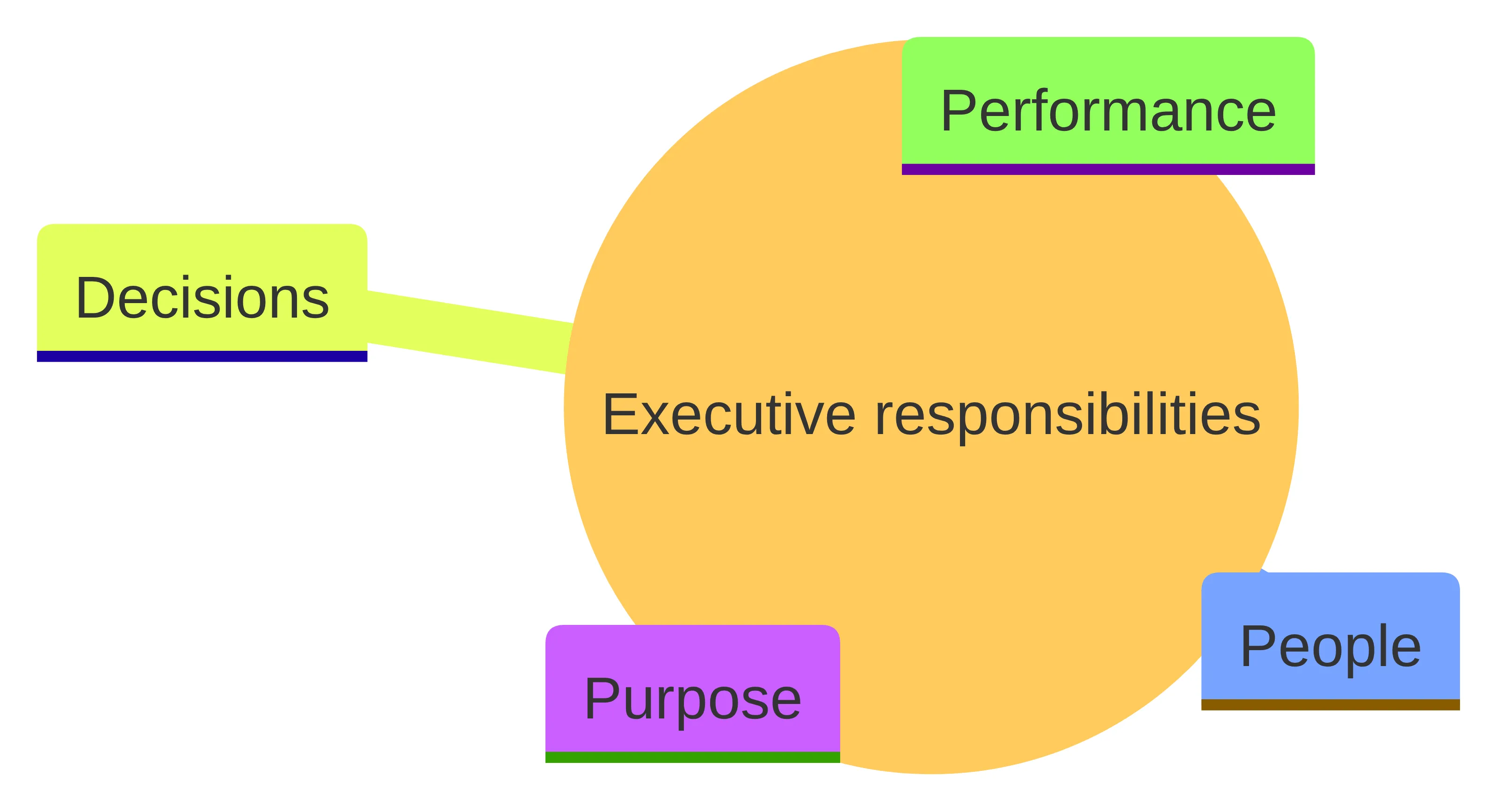
A practical framework organizes those responsibilities into four areas:
- Purpose: Articulate a clear mission that defines what the organization stands for and whom it exists to serve.
- People: Build alignment, trust, and cohesion across leadership levels, then communicate that foundation to every team.
- Decisions: Understand your strengths, recognize your limitations, and seek diverse perspectives when navigating difficult choices.
- Performance: Define exceptional performance, plan for results with managers, and hold people accountable for commitments and customer value.
This framework changes the executive development question. Instead of asking which skill matters most in every organization, ask which responsibility is currently limiting direction, alignment, commitment, or execution. Direction, alignment, and commitment can serve as outcomes for assessing leadership culture. That assessment helps identify a development priority without assuming that every organization needs the same emphasis.
The next step is to govern that priority as an organizational system. A leadership development program can align its shared capability framework with the organization’s purpose, values, vision, mission, and strategy. It can also secure executive support, resources, and protected time for development; create a culture of learning; and make development experiences and resources available at different levels in ways that align with career pathways.
Finally, decide in advance how the development effort will be assessed. Review three areas: what leaders do differently, what their teams experience, and the results of the work those teams produce. Choose two or three indicators for each area and build measurement into the development program rather than adding it at the end. Positive reactions to training alone do not establish behavioral change, so the assessment should connect the capability system to the work of the organization.
Build a Shared Capability Language Across Leadership Levels
A shared leadership model and capability framework create common language for leadership. Use that language across the levels involved in setting direction, managing work, and developing people. The framework should be aligned with organizational purpose, values, vision, mission, and strategy, with executive support and protected time for development.
Four responsibilities provide a useful organizing structure:
- Purpose concerns the mission and the reason the organization exists.
- People concerns alignment, trust, cohesion, and communication across leadership levels.
- Decisions concerns judgment, self-awareness, limitations, and diverse perspectives.
- Performance concerns expectations, planning, commitments, accountability, and customer value.
These areas are not a ranking or a diagnostic scorecard. They give the organization a consistent vocabulary for describing capabilities and connecting them to leadership responsibilities. The same vocabulary can support performance discussions, decision making, development planning, and communication with teams.
Keep the framework connected to the broader development environment. Leadership development programs can include interventions, experiences, and resources for people at different levels, aligned with career pathways. That connection helps executives avoid treating leadership skill as an individual trait detached from the organization’s work.
Make the framework specific enough to guide different roles without turning every role into the same job. An executive may establish the context and tradeoffs for a priority; a manager may translate that direction into team responsibilities; and a team leader may reinforce expectations in day-to-day coordination. These are different expressions of a shared capability, not separate definitions or a ranking of importance. The aim is to preserve common language while respecting decision authority and proximity to the work.
For each capability, write three parts: the leadership responsibility it serves, the behavior a role can control, and the evidence a reviewer can examine. Under performance, for example, an executive can clarify the result that matters, a manager can plan for it with the team, and a team leader can track commitments against agreed timing. Match the evidence to the role: clarity of expectations, quality of planning, or follow-through at review points. This prevents a development conversation from judging a manager on a decision only an executive can make.
Use the same calibration when assigning development resources. A person may need an intervention, an experience in which to apply the capability, or support from a trusted team member, mentor, or professional leadership development coach who can provide accountability. The appropriate mix depends on the role and its opportunity to practice. Protected time and executive support matter because a framework cannot become shared language if leaders have no room to use it. Review the framework with the people expected to apply it, and remove terms that do not help them describe real work. The result is a capability model that supports development conversations without confusing a title with a skill.
Connect Capability Expectations to Organizational Purpose
Purpose means articulating a clear mission that defines what the organization stands for and whom it exists to serve. In a capability framework, purpose gives leadership expectations their organizational context. It connects development language to the direction, values, vision, mission, and strategy that the organization has chosen.
Use that connection when describing what leaders need to do. A capability should not be presented as an abstract quality such as confidence or influence. Describe how it supports the organization’s purpose: explaining the mission, connecting choices to priorities, or clarifying the tradeoffs that follow from the direction.
This also gives different leadership levels a common reference point. Executives can use the mission to explain strategic intent, while managers can connect that intent to the decisions and responsibilities of their teams. The wording may vary by role, but the underlying purpose remains recognizable.
A shared framework is stronger when development conversations ask how a capability serves the organization’s direction. That question keeps leadership development relevant to the work rather than turning it into a detached list of personal attributes.
Extend the Capability Language Through People Leadership
People leadership includes building alignment, trust, and cohesion across leadership levels, then communicating that foundation to every team. Organizational leadership skills also help managers communicate, build teams, and make informed decisions that support performance and employee well-being.
A capability framework becomes usable when people can recognize its language in ordinary leadership relationships. Senior leaders establish the expectations and context. Managers translate those expectations for their teams and connect them to responsibilities. Teams then have a clearer basis for understanding how communication, trust, and cohesion relate to their work.
Alignment does not require agreement on every point. It requires people to understand the direction, their role in carrying it out, and the leadership expectations that apply to the work. Trust is supported when those expectations are communicated directly and handled consistently.
Development should therefore include opportunities for leaders at relevant levels to use the same capability language in conversations about teams, decisions, and responsibilities. When the language is shared, feedback can focus on a capability and its effect on work instead of relying on vague judgments about personality.
Develop Judgment Through Humility and Diverse Perspectives
Decision leadership involves understanding your strengths, recognizing your limitations, and seeking diverse perspectives when navigating difficult choices. Humility means accepting current reality and admitting that you do not have all the answers.
These capabilities can be developed as part of the organization’s shared leadership language. Describe judgment in terms of how leaders handle uncertainty, distinguish what they know from what they assume, and invite information that may affect a decision. Describe humility in terms of accepting relevant limits while retaining responsibility for the choice.
That wording gives leaders and managers something more useful than a personality label. It makes room for reflection on the decision process, the perspectives considered, and the ownership that remained clear. It also allows development conversations to address the same capability at different levels without assuming that every role carries the same decision authority.
When a leadership program includes decision capability, connect the development activity to the decisions leaders actually face. Ask what perspective was needed, what limitation was recognized, and how the final responsibility was handled. Those questions keep judgment and humility tied to executive work rather than treating them as abstract virtues.
Make Performance Skills Visible in Operating Expectations
Performance leadership means defining what exceptional performance looks like, planning for results with managers, and holding people accountable for commitments and customer value. Goal clarity requires a leader to set expectations and deadlines for achieving goals.
Within a capability framework, accountability is a leadership behavior with a clear operating context. Leaders need language for the result expected, the responsibility assigned, the timing involved, and the point at which progress will be reviewed. Managers need enough clarity to connect those expectations to team work without guessing what success means.
Discipline in leadership is the daily practice of accountability for yourself, your team, and your organization. That definition includes the leader’s own follow-through. A development system that teaches accountability should therefore consider how leaders set expectations, manage deadlines, respond to changing progress, and address commitments that are at risk.
Making these expectations explicit helps distinguish a performance capability from a general call to improve execution. It also gives the organization a consistent basis for development discussions across executives, managers, and team leaders.
Measure Transfer in Three Places
Leadership-development outcomes can be assessed in three places: what leaders do differently, what their teams experience, and the results of the work those teams produce. These areas provide a measurement structure for determining whether leadership development is transferring into organizational work.
Decide in advance which outcome areas to examine. Choose two or three indicators for each area and build the measurement into the development program rather than adding it at the end. The indicators should match the capability framework and the organizational context, so the review reflects the leadership behaviors and responsibilities the program is intended to develop.
The three areas answer different questions. Changed leader behavior shows whether the capability is appearing in leadership conduct. Team experience shows how that conduct is encountered by the people working with the leader. Team work results show what is happening in the work those teams produce. Considering all three keeps a development review from relying on a single reaction or impression.
This measurement structure also supports different leadership levels. Executives can review whether the development effort is connected to organizational priorities, while managers and teams can provide evidence about how the capabilities appear in daily work. The purpose is to examine transfer, not to claim a result that the available evidence does not show.
Use Measurement to Shape the Development System
A leadership development system should connect its shared framework, development resources, and measurement plan. The framework gives people common language. The development program provides interventions, experiences, and resources aligned with leadership responsibilities and career pathways. The measurement plan shows where transfer is appearing in leader behavior, team experience, and team work results.
Review those parts together before changing the development approach. Is the capability language connected to organizational purpose and strategy? Do the relevant leadership levels have access to development opportunities and protected time? Are the selected indicators tied to the capabilities the organization intends to develop? These questions examine the design of the system rather than assigning a personal deficit to one leader.
Use the planned evidence to decide what to retain, adapt, or examine further in the development program. If the measures do not show the intended transfer, revisit the connection between the capability, the development activity, the organizational context, and the indicators being used. The review should remain grounded in what leaders do, what teams experience, and what the work produces.
That approach gives executives a practical way to strengthen leadership capability without relying on a universal ranking of skills. It treats development as an organizational responsibility with shared language, relevant support, and evidence that can inform the next design decision.
Practice the Skill in Real Executive Work
Leadership development becomes practical when you attach a capability to work that already matters. Choose a live executive situation rather than treating development as separate from decisions, meetings, delegation, or follow-through.
If the priority is clearer accountability, use an upcoming commitment that crosses functions. If the priority is decision judgment, choose a decision with meaningful uncertainty and identify the perspectives you need before acting. If the priority is people leadership, use a conversation where trust, alignment, or cohesion is under pressure.
At MAP Consulting, we recommend using a trusted team member, mentor, or professional leadership development coach as part of accountability. Select someone who can observe the behavior or hear a useful account of what happened, then agree on the question that person will ask you afterward. The question might be, “What did you make clear?” or “Whose perspective did you seek before deciding?”
We also recommend building systems that support delegation of tasks and employee empowerment. Delegating does not mean transferring a task without context. Explain the intended outcome, decision boundaries, available support, and point at which progress will be reviewed. Then allow the person responsible to carry the work within those boundaries.
For a focused practice cycle:
- Choose one live situation and state the behavior you intend to use.
- Explain the expectation, ownership, timing, and decision boundaries.
- Invite the perspective or participation the situation requires.
- Delegate a responsibility where another person can own the work.
- Track progress through an agreed review point.
- Ask what you did that helped or hindered the behavior.
MAP Consulting recommends delegating new responsibilities, holding team members accountable, and tracking progress. Practice should produce a conversation about what happened, not a performance of leadership language in the abstract.
Keep the practice narrow enough to observe. One meeting, decision, or commitment can give you a clearer development conversation than a long list of behaviors that no one can review consistently.
Measure Transfer, Not Enthusiasm
Leadership development should be reviewed by what changes in work, not only by whether people enjoyed the session. Leadership-development outcomes can be assessed through changed leader behavior, team experience, and team work results.
A review of physician leadership training reported positive participant reactions but did not examine behavioral changes. That boundary matters beyond the specific training context: favorable reactions can tell you how an experience was received, but they do not by themselves show that a capability transferred into daily leadership behavior.
Set the measurement question before you begin. Decide which outcome areas you will examine, choose two or three indicators for each, and build the review into the development program rather than adding it at the end.
For a selected leadership capability, consider indicators such as:
- Leader behavior: Did you explain the decision path, invite the intended perspectives, delegate the responsibility, or set the agreed expectation?
- Team experience: Can managers describe the priority, ownership, decision boundary, and next review point? Do they experience the communication as clear enough to act?
- Team work results: Did the commitment move through the agreed stages? Were decisions made when expected? Did the work produce the intended deliverable or customer value?
Keep each indicator connected to the behavior you chose. If your priority is decision judgment, do not judge the practice only by a later financial result that depends on many other conditions. Review the quality of the decision process, what the team experienced, and the work that followed.
Schedule the review while the situation is still easy to recall. Compare the intended behavior with what actually happened, ask what helped or blocked it, and decide whether to continue practicing, adjust the behavior, or select a different capability.
A useful review asks three separate questions: What did you do differently? What did the team experience? What changed in the work? Keeping those questions separate helps you avoid claiming that a favorable reaction proves a change in execution.
Account for the Organization Around the Leader
Individual leadership development has more value when the surrounding organization gives the capability a place to operate. A shared leadership model and capability framework can create common language, but that language must connect with the organization’s purpose, strategy, expectations, resources, and time.
Ask what your organization is making easier or harder. A leader may practice clearer delegation while approval rules still require every decision to return to the executive team. A manager may communicate a priority consistently while different senior leaders continue to change it in separate conversations. A team may understand its commitment but lack the information or authority needed to complete it.
Before you label a pattern as an individual skill gap, examine the conditions around the behavior:
- Do senior leaders use the same terms for the capability and the priority?
- Does the organization provide time and resources for development?
- Do managers receive support to apply the behavior in their actual roles?
- Are decision rights and accountability consistent with the behavior you want?
- Does the review process examine both leadership behavior and team work?
This does not remove personal responsibility. It helps you place responsibility accurately. Your development focus may be a behavior you need to practice, an expectation the leadership team needs to clarify, or an organizational condition that needs to change alongside the behavior.
The practical question is simple: what must be true around the leader for the selected capability to become part of normal execution?
A shared framework is useful only when leaders use it in the same conversations: setting expectations, discussing decisions, reviewing commitments, and planning development. Give the language a place in those routines, or it will remain separate from the work it is meant to guide.
Turn the Framework Into a Development Decision
Leadership skills become a development decision when you connect them to a specific execution constraint. Use this sequence:
- Name the recurring problem in observable workplace terms.
- Map it to purpose, people, decisions, or performance.
- Describe the capability as a behavior you can practice.
- Apply that behavior in live executive work.
- Review what you did differently, what your team experienced, and what happened in the work.
- Continue the practice, adjust the behavior, or choose the next capability based on what you learn.
Decide those outcome areas in advance and select a small number of indicators before the development activity begins. That keeps the conversation tied to execution rather than broad impressions.
You do not need to develop every capability at once. You need a shared language, a clear priority, a real situation in which to practice, and a disciplined review of what followed. A qualified professional can help you determine what is suitable for your organization and how to structure customized leadership development around that priority.
Leadership Skills FAQ
What are the core leadership skills that executives should focus on?
Core leadership skills include the ability to articulate purpose, build alignment and trust among teams, make informed decisions, and ensure accountability for performance. These skills help executives navigate complex organizational challenges and drive effective execution.
How can leaders recognize gaps in their leadership skills?
Leaders can recognize gaps by observing recurring workplace signals such as unclear priorities, inconsistent decision-making, and lack of accountability. These signals indicate areas where leadership capabilities may need strengthening.
What actions can executives take to strengthen their leadership skills?
Executives can strengthen their leadership skills by practicing specific behaviors in real work situations, seeking feedback from trusted colleagues, and focusing on one capability at a time to ensure effective development.
How does organizational culture impact leadership effectiveness?
Organizational culture influences leadership effectiveness by shaping how leaders communicate, make decisions, and hold teams accountable.
What role does accountability play in leadership development?
Accountability is crucial in leadership development as it ensures that leaders follow through on commitments, set clear expectations, and track progress.
How can leaders measure the effectiveness of their leadership development efforts?
Leaders can measure effectiveness by assessing changes in their behavior, team experiences, and the outcomes of their work. This involves setting specific indicators before development activities and reviewing them afterward.
