Leader and Leadership: How Executives Turn Influence Into Coordinated Action
Locate the Leadership Work Before Choosing a Development Priority
A leader is a person who inspires and influences people to accomplish organizational goals through an assumed role or assigned responsibility. That definition identifies the person connected to influence and responsibility; it does not by itself show which part of leadership work needs attention. For that, examine the work through purpose, people, decisions, and performance.
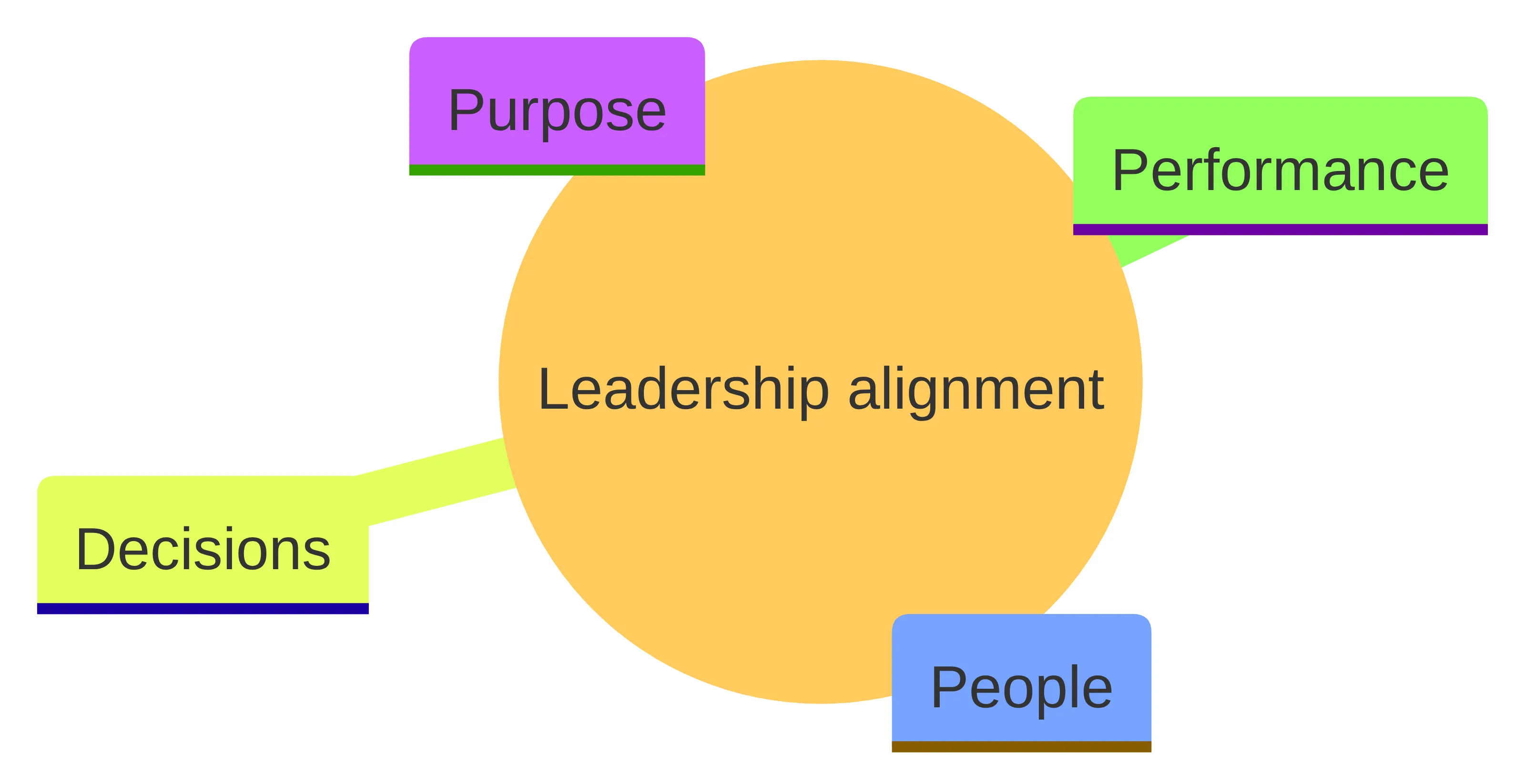
A leader and leadership are related, but the useful executive question is where leadership work needs attention. A leader is someone connected to an assumed role or responsibility; leadership involves influence, identity, and adaptability. A manager may hold formal authority, while leadership research distinguishes formal leaders from informal leaders and focuses on influence as well. Examine the work through four areas: the purpose being clarified, the people being aligned, the decisions being made, and the performance being defined and accountability being applied.
Use this four-part check before choosing a leadership-development priority:
- Purpose: Is the mission clear enough to guide priorities?
- People: Are relationships, trust, cohesion, and development receiving attention?
- Decisions: Are leaders considering perspectives and leading necessary change?
- Performance: Are expected results and accountability visible?
The check does not diagnose an individual. It helps an executive name the leadership work that deserves closer attention.
Use Four Responsibilities to Examine Leadership in Practice
Leadership is a process of influence that provides purpose, direction, and motivation to accomplish a mission and improve an organization. Purpose answers why the work matters. Direction clarifies what must be pursued and how priorities should be understood. Motivation connects the work to the willingness and energy needed to carry it forward.
Organizational leadership is not a fixed performance that looks identical in every setting. Leadership is described as a dynamic structure involving influence, identity, and adaptability. Your approach may need to change as the task becomes more complex, as team capability develops, or as the situation demands a different level of support. Adaptability does not mean abandoning standards; it means changing the way you help people reach them.
Leadership identity develops through feedback, experience, interactions with followers, and self-perception. That gives you a useful alternative to the idea that leaders are simply born with a permanent set of traits. You can examine how your behavior is experienced, learn from the response, and adjust the way you influence people. The process remains connected to organizational purpose rather than to personal style alone.
Taken together, the four responsibilities offer a practical route through an abstract topic. Start with the area that is least clear—purpose, people, decisions, or performance—then examine the observable behavior connected to it, such as clear communication, relationship-building, critical thinking, change leadership, or accountability. If the situation changes, revisit the approach rather than assuming that one behavior or style fits every team.
A Four-Part Lens for Leadership Responsibilities
The practical elements are straightforward:
- Purpose: Explain what the organization stands for and whom it serves.
- People: Build relationships, trust, cohesion, and development across leadership levels.
- Decisions: Think critically, consider perspectives, and lead necessary change.
- Performance: Define expected performance, plan for results, and hold people accountable.
These elements give you a way to discuss leadership without reducing it to charisma, seniority, or a preferred personality type.
Leadership Must Align Purpose, People, Decisions, and Performance
Leadership aligns four organizational responsibilities: purpose, people, decisions, and performance. Purpose gives teams a common reason for the work. People work through relationships, trust, cohesion, and development. Decisions convert competing information into choices. Performance gives those choices a visible standard and a line of accountability.
Purpose becomes useful when you communicate it clearly enough for different teams to connect their work to it. People become aligned when relationships and trust support cooperation across leadership levels. Gallup identifies hope, trust, stability, and compassion as four core things followers need from leaders. These needs do not replace performance expectations; they shape the conditions in which people can understand and carry them.
Decisions become leadership work when you weigh information, recognize limitations, and seek perspectives that improve the choice. A decision without ownership remains an announcement.
Use the four-part connection as a test of organizational alignment:
- Can your teams explain the purpose behind the priority?
- Do the people responsible for delivery have the relationships and support required to act?
- Are decisions made with enough perspective to move the work forward?
- Is performance defined clearly enough for commitments to be discussed and tracked?
A gap in any one part can interrupt the movement from direction to execution.
Direction Becomes Execution Through Communication, Decisions, and Accountability
Execution begins when leadership makes direction understandable at the point where work changes hands. Leadership alignment can weaken when behavioral expectations are unclear, communication is weak, accountability is inconsistent, leadership changes alter working relationships, or team members misunderstand how one another works.
At MAP Consulting, we believe goal clarity requires a leader to set expectations and deadlines for achieving goals. A broad priority therefore needs a visible translation: what must be done, who owns it, what completion means, and when progress will be reviewed. This does not require you to prescribe every step. It requires you to remove avoidable uncertainty about the result and the commitment.
Communication is more than sending a message once. Leadership communication gives teams a place to understand priorities, raise disagreements, and resolve competing interpretations. At MAP Consulting, we believe effective meetings are critical for aligning strategy and execution during uncertainty and change. A meeting supports leadership when it clarifies a decision, names an owner, or brings a commitment into view; a meeting that produces none of these leaves the organization with conversation but not coordinated action.
Accountability completes the communication cycle. You define the expected result, make the commitment visible, and return to it with enough consistency that people know what will be discussed. Inconsistent accountability creates a gap between stated standards and lived standards. Consistent accountability does not mean treating every situation identically; it means applying the agreed expectation deliberately and addressing changes in context openly.
For a priority that crosses teams, write down four points before asking for execution:
- The result the organization is pursuing.
- The expectations and deadline attached to the result.
- The person or team responsible for the next commitment.
- The meeting or review point where progress and obstacles will be addressed.
This simple translation gives direction a path into daily work.
Leadership Can Exist Beyond the Organizational Chart
Formal authority and leadership influence can overlap without being identical. A manager may have assigned responsibility for a team, budget, or decision, while an informal leader may influence how people interpret a problem or respond to a goal. Leadership research distinguishes formally designated leaders from informal leaders and examines influence more broadly.
Your organizational chart can show reporting relationships, but it cannot show every source of influence. Notice who helps people make sense of change, who brings concerns into the conversation, who connects teams around a goal, and who accepts responsibility when action is required. Those observations do not erase formal accountability. They help you see where leadership is already operating and where formal leaders may need to strengthen alignment.
A person can influence others without holding the final decision right, and a person with decision authority can still fail to create shared understanding. Treat influence and responsibility as connected but separate questions: who can move people, and who must own the organizational choice? Strong leadership makes both questions visible.
Adapt the Leadership Approach to the Situation
Situational leadership adapts leadership approaches to follower readiness, task complexity, competence, and psychological readiness. The principle challenges the idea that effective leadership means behaving the same way with every person and in every circumstance. A new responsibility, a time-sensitive decision, and a capable team member may each call for a different form of support.
A situational approach may involve directing, coaching, supporting, or delegating according to employees’ competence and commitment. Directing can provide structure when the task or capability is unfamiliar. Coaching can combine instruction with dialogue while capability develops. Supporting can give capable people room to work through judgment and confidence. Delegating can transfer responsibility when the person and situation are ready for it.
Use the situation, not your preferred style, to choose the approach. Before you act, ask:
- How complex or unfamiliar is the task?
- What relevant competence does the person already have?
- How much commitment and confidence are visible?
- What level of direction or support will help the person take responsibility?
The answers can change as the work progresses. Revisit the approach rather than treating your first choice as permanent.
Adaptability does not mean lowering the standard or changing direction without explanation. The goal remains clear while the path of support changes. That distinction lets you provide structure where it is needed, develop judgment where it is forming, and transfer responsibility when the context supports it.
Review Leadership by Purpose, People, Decisions, and Performance
Review leadership in this order:
- Purpose: Is there a clear mission and direction?
- People: Are alignment, trust, cohesion, and development being addressed across leadership levels?
- Decisions: Are diverse perspectives informing choices and necessary change?
- Performance: Are expected results and accountability clear?
Then consider whether the approach fits the situation. Readiness, task complexity, competence, and commitment can affect whether directing, coaching, supporting, or delegating is appropriate. This sequence keeps leadership development tied to an observable area of work rather than to a general label.
Leadership development remains a practical organizational concern. A cited TeamStage dataset reported that almost 80% of companies had a leadership gap, while only 5% had a leadership development program implemented at every level. The figures describe reported company conditions, not a diagnosis of your organization. Use them as context for asking whether leadership expectations and development are visible across the levels where work is carried out.
Test Leadership Through Observable Behaviors
Observable leadership behavior gives you a more useful test than a description such as visionary, decisive, or collaborative. Look for what happens in ordinary work:
- You state the expected result and deadline clearly.
- You listen for misunderstanding before treating silence as agreement.
- You delegate a responsibility rather than keeping every decision at the top.
- You track progress against the commitment instead of waiting for a final surprise.
- You hold people accountable for agreed work and customer value.
These behaviors make influence visible at the point where teams must coordinate.
Goal clarity and listening work together. At MAP Consulting, we believe a leader must set expectations and deadlines for goals. MAP Consulting also recommends noticing your own struggles with listening so you can identify communication habits that need to change. If you give a clear deadline but do not hear the concerns or assumptions behind a response, you may mistake verbal agreement for shared understanding.
Delegation is visible when responsibility moves to the team and progress remains discussable. MAP Consulting recommends building systems that support delegation and employee empowerment, along with delegating new responsibilities and tracking progress for accountability. The practical test is not whether you handed off a task once. It is whether the person knows the expected result, has responsibility for the work, and can bring progress or obstacles into the operating rhythm.
Accountability is observable in the follow-up. You return to commitments, compare progress with the agreed expectation, and address a change in circumstance without quietly changing the standard. Leadership alignment weakens when leaders agree on performance expectations but apply or model them inconsistently. Your follow-through therefore communicates what the organization actually treats as a commitment.
Choose one real priority and inspect it through four questions:
- Is the result and deadline explicit?
- Has the right responsibility moved to the team?
- Is progress visible before the deadline arrives?
- Are you listening for the communication habit that could block execution?
The answers point to behavior you can observe without trying to label your entire leadership style.
Use a Focused Reflection to Choose a Development Priority
A focused reflection can help you choose one leadership-development priority without turning a complex organization into a label. Leadership identity can develop through feedback, experience, interactions with followers, and self-perception. Use those inputs to examine a behavior and its effect, not to assign yourself a permanent category.
Write brief answers to these questions:
- Purpose: Can your teams explain the priority and why it matters?
- Alignment: Do different functions understand how their work connects?
- Accountability: Are commitments, owners, and progress visible?
- Feedback: What response from your team challenges your view of your own leadership?
- Discipline: What daily practice would make accountability for yourself, your team, or the organization more consistent?
- Context: Does your behavior fit the task’s complexity and the team’s competence and commitment?
The questions cover common alignment challenges, including unclear expectations, weak communication, inconsistent accountability, leadership changes, and misunderstandings about how people work.
Select the question that produces the clearest observable gap, then name one behavior connected to it. If priorities are unclear, practice stating the result and deadline. If progress disappears after delegation, create a visible follow-up point. If communication breaks down, notice when you stop listening and change that interaction. If the team needs a different level of support, adjust your approach to the situation.
Use the pattern of the break to choose the next behavior rather than treating every leadership problem as a communication problem. Four distinctions can sharpen that choice:
- Direction: If people cannot explain the priority, result, or deadline, the immediate work is to clarify purpose and expectations.
- Coordination: If teams understand their own tasks but not how the work connects, examine communication, decision forums, and the relationships needed across functions.
- Capability: If the goal is clear but the person is not ready for the task, adjust the level of direction, coaching, support, or delegation to the situation.
- Accountability: If ownership is stated but progress or follow-through is invisible, make the commitment and review point visible.
Start with the earliest break you can observe. A later symptom may be downstream: missed follow-through can reflect unclear expectations, an unsuitable level of support, or inconsistent review. This does not prove a single cause, and it is not a diagnosis. It gives you a disciplined question for your next conversation: what must become clearer, more supported, or more consistently followed so the team can act?
This reflection is a way to focus your next conversation or practice; it is not a verdict on your leadership identity. Your answers may change as the organization, people, and work change. Treat the priority as a working question that can be revisited through feedback and experience.
Trace One Organizational Handoff to Clarify a Leadership Priority
Rather than begin with a leadership style, trace one organizational handoff: the point where a priority moves from executive direction into a team’s work. Examine whether the expected behavior is clear, whether communication gives people a way to raise questions about priorities and decisions, and whether accountability is visible in follow-through. This keeps the review focused on observable leadership work without treating one style as universal.
Write down the priority, the behavior you will practice, and the point at which you will look for a response from the team. Then ask what changed in understanding, ownership, or follow-through. For an individual development decision, a qualified professional should determine what fits your circumstances and responsibilities. Your next step should remain connected to the organization’s actual work.
For this review, a leader is someone who inspires and influences people through an assumed role or assigned responsibility; leadership is examined at the handoff where a priority is communicated, decisions are made, and commitments are followed through. Keep that distinction in view as you examine the behavior your organization needs next.
What Should an Executive Look for When Defining Leadership in Practice?
What is the difference between a leader and leadership?
A leader is a person who inspires and influences others to achieve organizational goals, while leadership refers to the process of turning that influence into purpose, direction, motivation, and organizational improvement.
How does leadership translate into organizational action?
Leadership translates into action by providing clear purpose, direction, and motivation, which helps teams understand their roles and responsibilities, leading to coordinated efforts and accountability.
What are the core responsibilities of leadership?
Core responsibilities include defining purpose, building relationships, making informed decisions, and ensuring performance accountability within the organization.
How can leaders adapt their approach to different situations?
Leaders can adapt their approach by assessing the complexity of tasks, the competence of team members, and the level of commitment required, using strategies such as directing, coaching, supporting, or delegating.
What are observable behaviors that indicate effective leadership?
Observable behaviors include clearly stating expected results and deadlines, actively listening to team members, delegating responsibilities, tracking progress, and holding individuals accountable for their commitments.
What should leaders focus on for their development priorities?
Leaders should focus on areas such as improving communication, enhancing delegation skills, fostering accountability, and adapting their leadership style to meet the needs of their teams.
